
Background and History
I have named several marbles from various JABO runs. Some folks may know about me and others may not. I was the original moderator on the JABO thread at All About Marbles Board, and it was at my suggestion that Kevin (FeelingMarbleous) created the JABO World section. That doesn’t really mean a lot in my opinion. By way of introduction for newer folks so you don’t think I am off my rocker — in my personal experience, the best authorities on the JABO Joker runs are NANTUCKETDINK and BERMAR, and those who were part, partner, or parcel to the individual runs and their preparations: Steve Sturtz, Ed Parsons, Jim King, Rick Hall, etc.
I have named types and families (discussed later) in the following runs:
- All runs — “Pinky,” a designation for any marble containing significantly pink color.
-
2008 JABO Joker I — “Precranberry Lutz Aventurine”
(JABO Joker I Cranberry Types). - 2008 JABO Joker 2nd Run — “Blood Vipers,” “Blood Viper Nests.”
- 2009 JABO Encore — “Electric Striped,” “Sunflowers,” “Electric Orange Submarine,” “Blush Oxbloods,” “Cranberry Lutz,” “Orange Slag,” “Orange Brick.”
- 2009 JABO Rainbow Run I — “Oxblood Hard Candy,” “Cotton Candy,” “Easter Egg,” “Hendrix,” “Exotic,” “Frosted Oxblood,” “Painted Oxblood,” “Tequila Oxblood,” “Goldrush,” “Oxblood Salmon,” “Superman,” “Superboy,” “Blue Grass,” “Milk Oxblood Metallic,” “Oxblood Rooster,” “Milk Oxblood Lavender,” “Silver Oxblood Stringer.”
- 2010 JABO Frankie Run — “Gobi Green,” “Gobi Oasis,” “Gobi Storm,” “Gobi Cranberry Oasis,” “Gobi Black Mesa,” “Lifesaver,” “Superman,” “Superman Kryptonite,” “Blood River,” “Pink River,” “Oxblood Green River,” “Xanadu,” “Murple.”
And so on. I use such names on the marble boards, in eBay auctions, on Facebook, and in regular conversation. When I am corrected on a name, I correct myself and any posts which may have provided incorrect information on the marbles in question.
In late 1999 I began collecting, buying, trading, and selling vintage marbles. This was a hobby as I worked in the IT field and the hobby supported itself for the first few years. Photographing stunning marbles was part of my passion, and remains so to this day.
However, being a native West Coaster, there were few marbles “in the wild.” The auctions in late 1999 through about 2004 on eBay (which was my main source of purchases and selling) began to dry up as folks began to recognize the value of individual marbles. (More on this later.) Then in 2008, the JABO Joker marbles hit the market and my passion was reborn. But the prices were so high it was only possible in the latter part of that year to purchase a few (five) of the marbles which were produced.
In 2009 I came into some money and began collecting and selling JABO experimental marbles. There had been an explosive growth in the market following the production of the first contract run, now known as the JABO Joker I (J.E.R.K.) run, designated the Original Joker run by many. These marbles were produced by a group of private collectors who purchased the glass which went into the run and paid a contract fee for the usage of the JABO Inc. facilities — in particular the furnaces and marble‑making machine which produced the actual marbles.
By 2009 I had become an investor, purchasing two full shares: one in the Rainbow Run and one in a yet‑to‑be‑named crystal run — later named the Omega run by me. More on Omegas later.
Just prior to that I had purchased several hundred marbles from various groups of investor runs which were being produced at the rate of 5–13 runs a year at JABO as private runs. These comprised the Experimental or Classic Runs from JABO Inc. In so doing, I found myself in possession of several marbles which were all called the same thing — Foxfire, Joker Fall Harvest, Joker 2nd Run, Eagles, Tribute to Last Dance; there is a long list today. The point is that while some of the marbles had been named by participants in the runs, most were not named, and this was confusing because within the Foxfire run there were at least eight families that I have seen, and a wide variation within these families.
What’s a Marble Family?
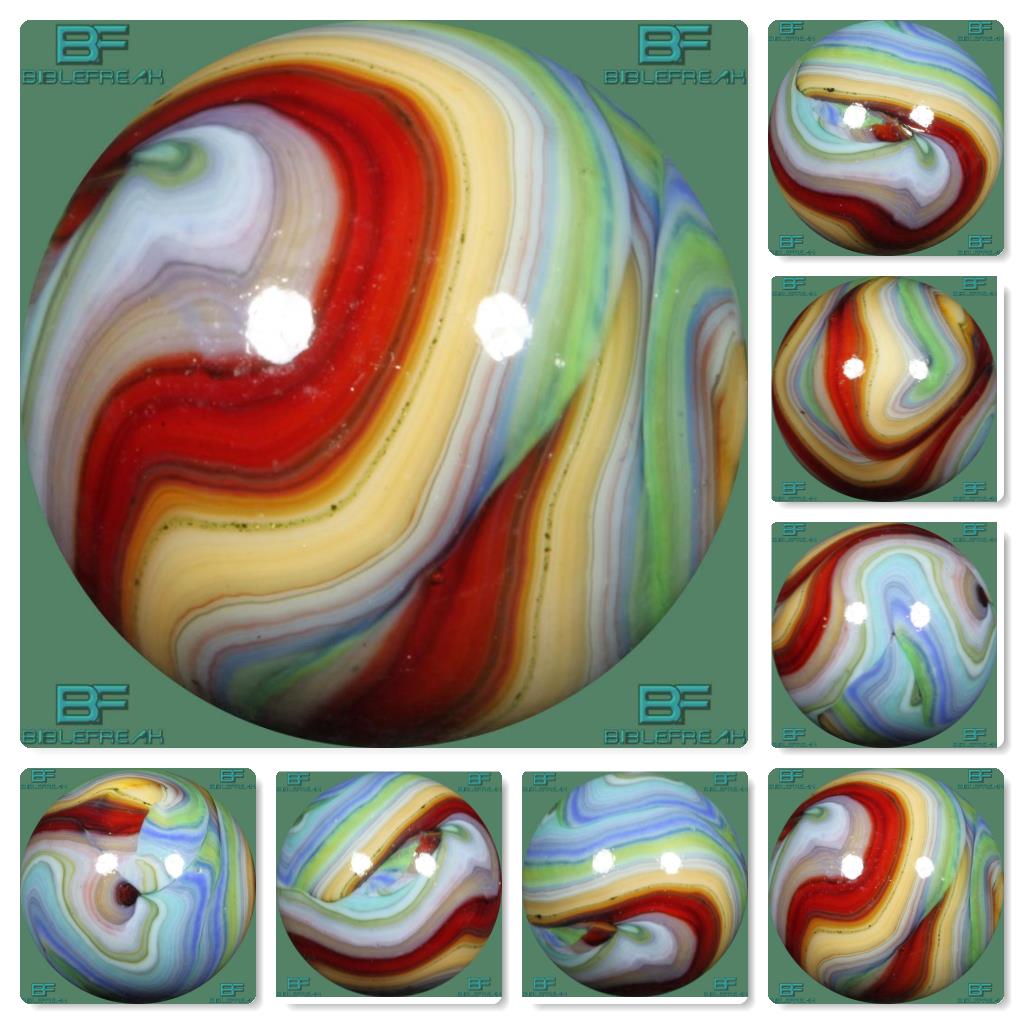
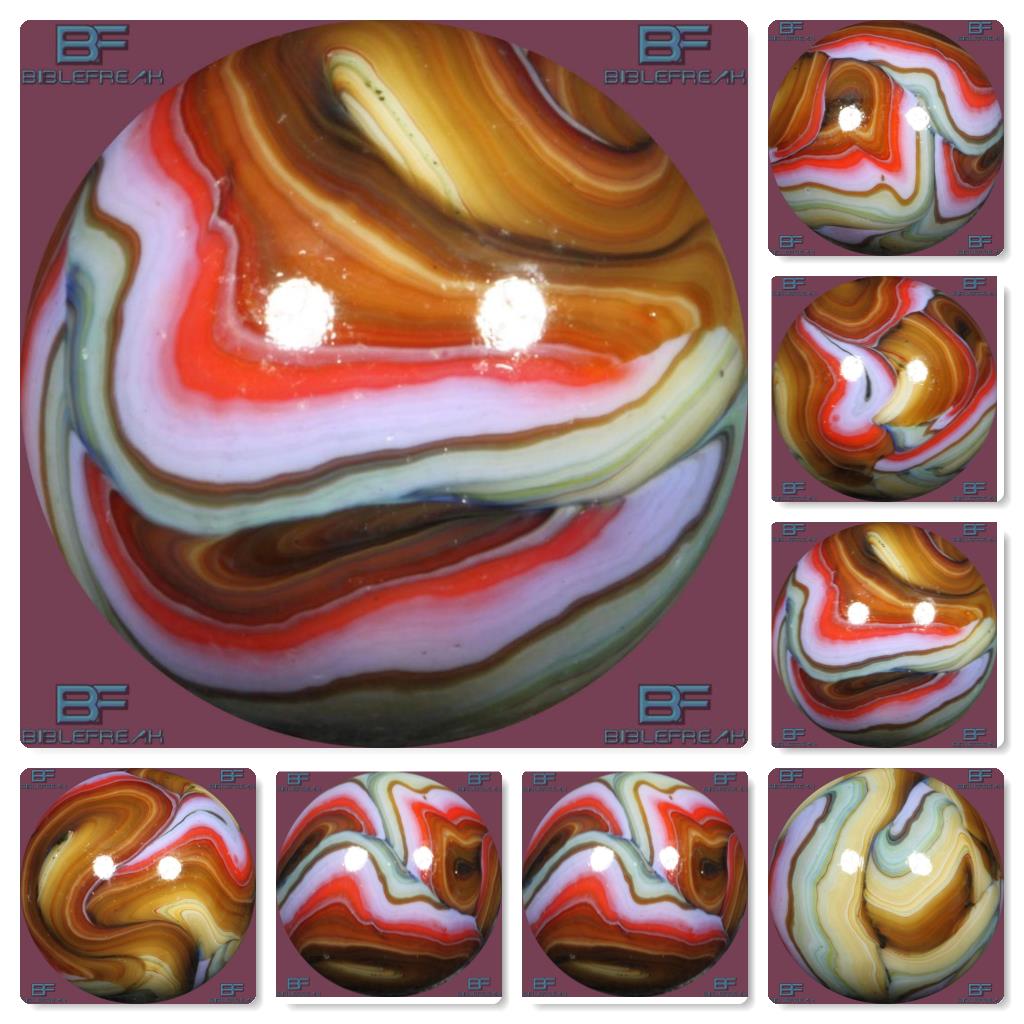
The runs were dated and named (e.g., Foxfire — May 14th, 2009). All the marbles produced at JABO in these runs under the supervision of Dave McCullough and the JABO plant workers were in a swirl pattern; some were less swirly, others more. Occasionally a few patch types might come out where the colors were stretched across the face of the marble which is bisected at the sides of the marble — also called the seams. The families are the color variations produced through the addition of colored glass added to the base glass, which is constantly heated in a large furnace. They might drop purple, goldstone, red, orange, and green in the furnace for 5–30 minutes, then change to yellow, green, blue, and various aventurines for an hour, or switch up the colors using as many as 12 or even 14 colors (the average was more like 3 to 7). To get a better idea of how families change, see the JABO 2008 Joker I Cranberry Types article linked above.
This constant inflow of color variations results in marble families, which flow out of the furnace to the cutter, onto the rollers, and into the cooling bins. A family that comes out yellow, red, and blue — well‑known colors within the marble community — regardless of manufacturer, has historically been called “Superman” marbles. Black and bright yellow — a “Bumble Bee” or “Yellow Jacket.” You get the idea. What do you call a transparent‑based marble with tan, green aventurine, oxblood (burnt goldstone — but that’s another article), and some blue? I thought they looked like Navajo Indian blanket colors, and so I called them “Indian Blankets” in my eBay descriptions. I noted originally I was not authorized to name the marbles, but several investors told me, “You can name them whatever you want.” Another Foxfire family was bright orange with dark black streaks and oxblood; they looked like tiger stripes, so I named them “Tiger’s Bloods.” As an investor I named many of the Rainbows from 2009, and also the Omegas, which it appears I may be the only holder of in any significant quantity — but that’s another story altogether.
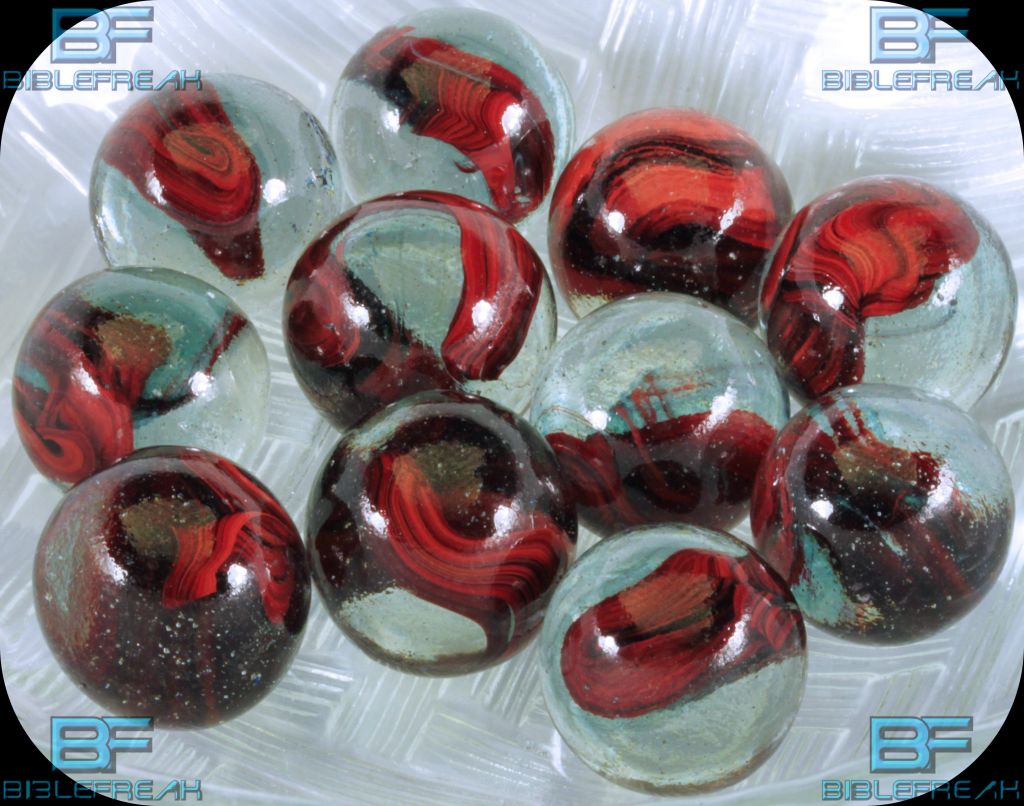
I then came into possession of a large group of the JABO Joker 2nd Run (Oxblood Aventurine Series) from June 27th, 2008. Among them were marbles called “Cobras” by the investors — stunning transparent marbles with a dollop of oxblood in an otherwise ~80% transparent marble. Others had more wispy threads of oxblood; others were near “Bricks,” with almost 100% oxblood coverage.
Between 2009 and 2011 there was a community discussion about naming modern JABOs using some vintage names like “Cobra” or “Brick.” These were legitimate concerns as newcomers could be confused when marbles were being identified as antique or vintage (Akro, CAC, etc.). There were also concerns about fraud — some were purposefully selling modern JABOs as older, more valuable types which looked very similar.
So I looked at these JABO Joker 2nd Run (Oxblood Aventurine Series) “Cobras” and wrote an article suggesting we call them “Blood Vipers,” and the fuller ones “Blood Viper Nests.” Some folks loved the name instantly; others balked. But the names stuck and continue to be used.
Because of the wide proliferation of my photographs identifying the marbles with various names, I have been either hated or loved as a result. I can say with 100% of my heart, I only want to help the cause of marble collecting and will continue to use names which make sense, provide immediate recognition, and photographs to do the same.
Why Naming Marbles Is Important
- To distinguish the individual families within a given run.
- To provide recognition. Names that match physical description provide instant recognition.
- For historical identification.
- It’s fun.
Is there value in naming marbles? Look at the classics that are well sought after: CAC Flames — aptly named and clearly recognizable; Superman marbles — clearly distinctive. Distinctive naming has value. But how do we go about naming them?
The run names and dates remain just that. So a transparent Foxfire with yellow, red, and blue is a “Foxfire Superman,” generally speaking. Now the investors may not like that, and if they have provided a name then let them clearly publish the names and show examples. I have done this consistently with marbles in runs where I was an investor and will continue to do so, as in the Frankie Gobis.
There was a killer Superman‑colored Frankie, but many had a slight green tinge (if you find one that’s not tinged, grab it). I have named them “Superman Kryptonites.”
And so it goes. The other alternative is to describe runs with long descriptions. Guy one says to Guy two, “It’s a JABO Joker Frankie, green‑tinged, oxblood and slate blue, with flecks of green aventurine.” Guy two: “That sounds like a Superman with Kryptonite poisoning.” “Yeah — a Superman Kryptonite!” Guy one: “Man, you’re right — Frankie Superman Kryptonite! That’s way better than ‘JABO Joker Frankie, green‑tinged, oxblood and slate blue, with flecks of green aventurine.’”
For the name of a marble to make sense it needs to have a common and reasonable connection to the name. This is why “Superman,” “Spiderman,” “Bumble Bee,” “Baseball,” “Flaming Dragon,” “Liberty,” and many others have stayed in collectors’ groups as names with instant recognition. CAC and MFC both made Bricks, but the common thread is the recognizable name because it matches the marble’s distinctives.
More History and My Passion
This is a long article. It goes through my history as a collector in limited detail above — and more follows — for a reason: if you’re interested, please keep reading. It will let you know where I am coming from and why.
I had my introduction to the marble collecting field in 2000 when I began researching collectibles on the internet — specifically eBay. At the time eBay was primarily a collectors’ marketplace and, though I was looking at model kits and other like items from my childhood, I stumbled upon marbles as one of the categories.
That first year I was buying large lots of marbles on eBay for relatively few dollars and joined a few forums. I struck up an online and email friendship with Alan Basinet (now deceased) — “Marble Alan”
(marblealanhome) — and began learning about marbles and their history. This I learned was a lifelong educational process, which involved many aspects. At the time, books were relatively few and the internet was growing.
Within a few years I had progressed from a novice to enthusiast and was considered the local expert on Modern Machine‑Made from the early ’20s to the present. This was largely due to my participation in online forums and Marble Alan’s growing site — and our friendship. I would send him high‑quality images and he would ID marbles I was unsure about.
But as the market on eBay grew, the large lots and purchases dried up. I attribute this to one particular auction which involved a cheese cask found in an old barn as part of an estate purchase, with literally hundreds — maybe thousands — of the highest‑quality vintage marbles from all kinds of makers along with German handmades ever seen on eBay up to that time. The seller had done two sets of pictures, at the request of buyers, which showed marbles then worth at least $100,000. This auction went for over $5K or $10K; the actual number escapes me. I recall speaking to Alan about it; we were like, “Man, wish I had the money to buy them.” It was after that auction that things changed.
This is significant, because in those years leading up to 2000 there were thousands of collectors and dozens of groups and clubs. Knowledge was passed word of mouth and literally “in hand.” The story of location, maker, specific factory, year of manufacture — all of it was a word‑of‑mouth process from the 1940s through the early 1990s. Personally, I believe this is still the best possible education you can have; if you’re blessed to live where there are active clubs, take advantage of it. There is no better education than in‑hand examination, face‑to‑face communication, meetings, shows, festivals, and clubs.
After the cheese cask auction, eBay changed where marbles were concerned — and has continued to do so. The attic, estate, basement, and other large‑group finds started drying up. In their place were lots of smaller groups by lots of folks, and competition for these groups would vary. A seller who knew nothing about the marbles they had would throw up 20–30 pieces and one could be a killer Akro Popeye, or Peltier Golden Rebel, or Superman — and that one would bring $150+, while the next five they had would bring $5. Some of us would share knowledge, but in these years Marble Alan again became a very wise seller, taking excellent pictures, upgrading his cameras, and selling known marbles by name — bringing big bucks. He parlayed this into a consignment business which at times had him so busy he could not keep up. See this interview from 2009 where he recounts some of this history:
Collectors Weekly interview with Alan Basinet (highly recommended; he also addresses the history of naming).
Being a West Coaster, there were relatively few finds locally to be had, and so my days of buying and selling on eBay tapered off. Being a full‑time father, worker, reader, movie lover, and churchgoer, my time on eBay was spent with occasional finds and the selling off of personal collectibles in the pursuit of photography — and digital photography equipment in particular (another way things changed).
Photography
Photography in 2000 was expensive for most; digital cameras were only just getting to the point where high‑quality images for eBay and online groups were feasible. I spent a lot of my sales money on purchasing new equipment, increasing my skill, and refining my techniques.
As you can see today, it’s much easier to take photos and share them, and posting marble images has become much easier as well. I often receive compliments on my marble photography because I love doing it; that is why I continue. I continue to archive all my images and hope to one day produce a resource that will add long‑term to the marble collecting passion that keeps us young at heart and eager to share, talk, photograph, and learn.
As for naming marbles, if you played with marbles as a kid this process was instinctive — just like making up the rules as we played was. I never played Ringer, but some variation of keepers over the distance of 10 square yards, through tree roots, grass, dirt, and whatever else was around. It was fun! I name marbles for the same reason. It’s fun. Thanks for reading.
Matthew (BIBLEfreak) Davis
On Facebook
-
JABO, Sammy and DAS Marbles Early 90’s — Today
-
JABO, Sammy and DAS Marbles: BUY SELL TRADE
-
JABO Marbles and More